
Emulsifiers: The Hidden Ingredient Messing with Your Teen's Gut
If your teenager grabbed a flavoured yogurt, a protein bar, or a squeeze of dressing today, they almost certainly ate an emulsifier - probably several. These additives are in most packaged, "creamy," or shelf-stable foods, and they've become one of the most active areas of gut health research over the last five years. One thing I’m seeing over & over in clinic is teen’s presenting with dysbiosis eating a kinda “healthy” diet.
This isn't a "throw out your pantry" post. It's a plain-English breakdown of what emulsifiers are, what the current science says about their effect on the gut, why this is especially worth understanding during the teen years, and what small, realistic changes actually help.
What Are Emulsifiers, Exactly?
Emulsifiers are food additives that keep ingredients that normally separate - like oil and water - blended together. They're the reason salad dressing doesn't split, ice cream stays smooth instead of icy, and bread stays soft on the shelf for weeks instead of days.
They're legal, and used across nearly every category of processed food. The most commonly studied ones include:
Carrageenan (E407) - derived from seaweed, used in dairy and plant milks
Polysorbate 80 (E433) - used in ice cream, dressings, baked goods
Carboxymethylcellulose / CMC (E466) - a cellulose-derived thickener, common in baked goods and processed foods
Mono- and diglycerides of fatty acids (E471) - one of the most widely used emulsifiers in packaged foods
Soy lecithin - a more naturally derived option, found in chocolate and baked goods
Being "approved" means these additives passed safety review at typical exposure levels - it doesn't mean researchers have fully mapped out what happens with the cumulative, daily exposure that comes from eating multiple processed foods, particularly in a still-developing gut.
The Gut Mechanism: Why Emulsifiers Are Being Studied
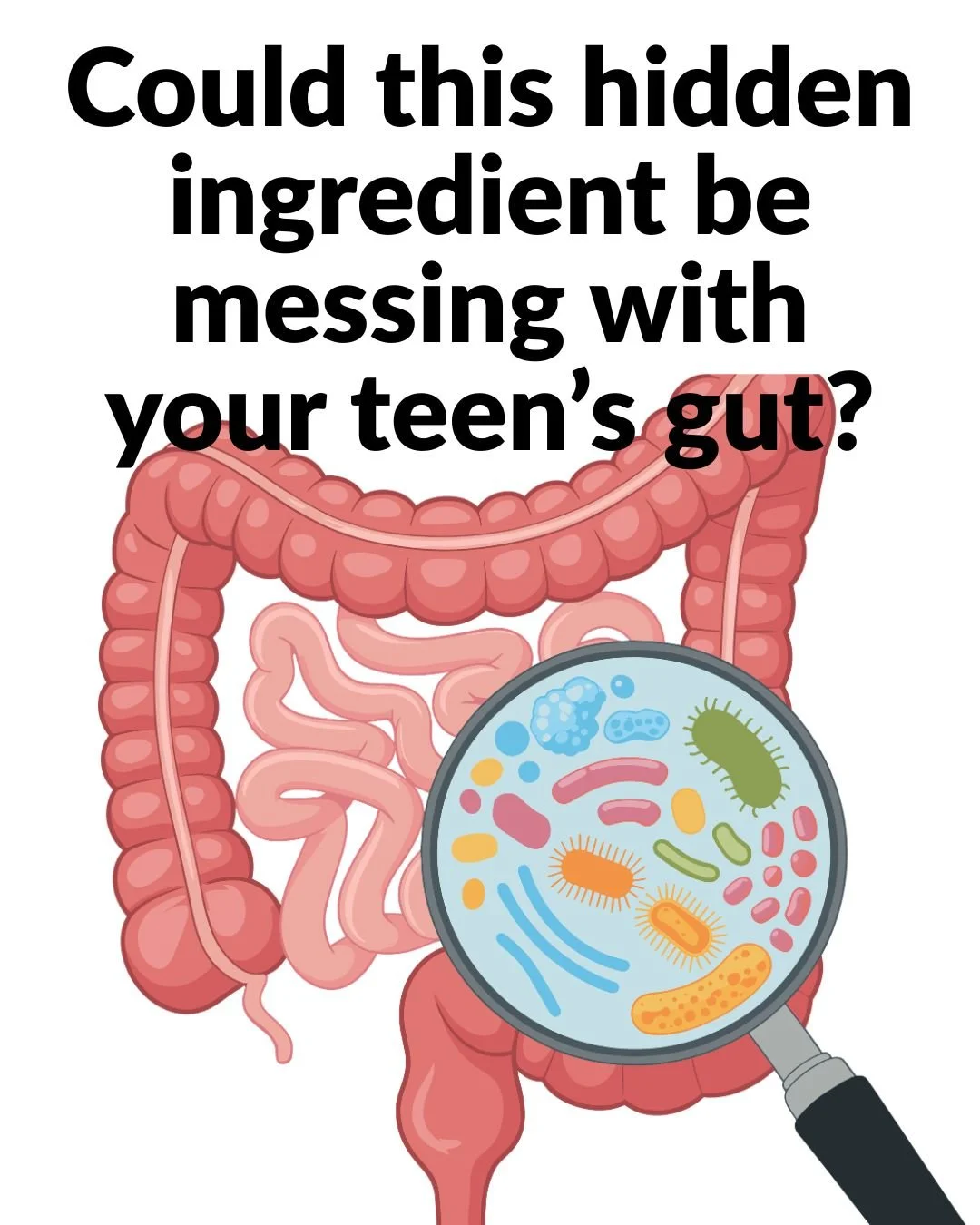
Your intestines are lined with a protective mucus layer. Think of it as a buffer zone - it keeps the trillions of bacteria living in your gut at a safe distance from the intestinal wall itself, preventing them from triggering an immune response.
A body of research - led in large part by microbiome researcher Benoit Chassaing and colleagues - has found that certain emulsifiers can thin this mucus layer in animal models. In one study, the emulsifier mono- and diglycerides modified gut microbiome diversity, causing dysbiosis, decreasing the distance between bacteria and epithelial cells, and potentially increasing inflammation by raising circulating levels of bacterial toxins.
When bacteria get closer to the gut wall than they should, it can trigger low-grade inflammation and shift the balance of the gut microbiome - the imbalance commonly referred to as dysbiosis. A balanced gut microbiome plays a role in immune regulation, nutrient and metabolic balance, and keeping harmful pathogens from taking hold, while dysbiosis has been linked to conditions like obesity, inflammatory bowel disease, and metabolic syndrome.Make it stand out
Whatever it is, the way you tell your story online can make all the difference.
This Isn't Just Mouse Data Anymore
For years, most of the strongest evidence on emulsifiers came from animal studies. That's changed recently, with two developments worth knowing about:
1. A placebo-controlled human trial (2025). Published in Clinical Gastroenterology and Hepatology, this randomized trial tested five common dietary emulsifiers in humans and evaluated their effects on intestinal inflammation, permeability, and the gut microbiome, building on earlier concern that dietary emulsifier consumption might promote intestinal inflammation, potentially contributing to inflammatory bowel disease over time.
2. The NutriNet-Santé cohort. This French prospective study tracked a large cohort of adults' quantitative exposure to a wide range of food additive emulsifiers, ultimately following 92,000 participants. The study found associations between higher intakes of carrageenans and mono- and diglycerides of fatty acids with overall, breast, and prostate cancer risk, though no association was found with colorectal cancer, and the researchers noted these results need to be replicated in other populations. The same research group has also linked emulsifier intake in this cohort to cardiovascular disease and type 2 diabetes risk in separate published analyses.
3. Direct evidence in humans on gut bacteria. Within the NutriNet-Santé research program, a randomized controlled trial found that short-term intake of carboxymethylcellulose in healthy individuals at high doses rapidly altered gut microbiota composition and the metabolites the microbiome produces, compared with an additive-free diet.
4. Newer research on early-life exposure. A December 2025 study out of Institut Pasteur found that when mother mice consumed dietary emulsifiers, it negatively affected the gut microbiota of their offspring, with these early changes linked to a higher risk of chronic inflammatory bowel conditions and obesity later in life. The researchers noted this points to health effects that may extend across generations and underscores the need for human studies on how early-life emulsifier exposure influences long-term health.
An honest caveat
What we can say confidently: the mechanistic pathway (mucus layer thinning → bacterial proximity → inflammation) is well-documented in lab and animal models, the newer human trial data is starting to support similar patterns, and enough signal exists that researchers across multiple independent groups are actively investigating it further.
It's important to be precise about what this research does and doesn't show. Cohort studies like NutriNet-Santé show associations, not direct proof of cause and effect, the study authors themselves note limitations including possible exposure measurement errors and potential residual confounding from the observational design. And a broader review of the field found that results across studies on emulsifiers and gut microbiota diversity are often inconsistent, which is normal for an emerging research area.
Why This Matters Especially During the Teen Years
A few reasons this topic deserves extra attention for parents of teenagers specifically:
The gut microbiome is still maturing. While the most dramatic shifts happen in infancy, the adolescent gut continues to develop and stabilize well into the teen years - making it a meaningful window for lasting influence.
Teens are in a major hormonal transition, and there's a well-established two-way relationship between gut health and hormone metabolism.
The gut-brain connection is especially relevant during adolescence, a period already marked by significant mood and mental health shifts.
Teens simply eat more packaged, ready-to-grab food than any other age group - sports drinks, protein bars, flavored yogurt, dressings, and snacks eaten between school, sports, and social life.
None of this means a teenager who eats a granola bar is doing damage. It means that, cumulatively, teens may have some of the highest daily emulsifier exposure of any age group, which makes it worth understanding, not fearing.
What To Actually Do About It
This is not a call to eliminate every packaged food from your house - that's neither realistic nor necessary, and food anxiety in teens carries its own real risks. The goal is reducing daily load, not achieving zero exposure.
Start by scanning labels for these four:
Carrageenan (E407)
Polysorbate 80 (E433)
Carboxymethylcellulose / CMC (E466)
Mono- and diglycerides of fatty acids (E471)
Easy, low-effort swaps:
Plain yogurt + fresh fruit or a drizzle of honey, instead of flavored yogurt. Here is a list of emulsifier-free options:
Dairy-free: Nakula Organic Coconut Yogurt, Pure Harvest Organic Coconut Yogurt, CoYo Natural Coconut Yogurt, Cocobella Natural Coconut Yogurt, The Collective Plant Yogurt
Dairy: Barambah Organics Natural Yogurt, Barambah Organics Greek Yogurt, Paris Creek Organic Natural Yogurt, Mungalli Creek Biodynamic Yogurt, Jalna Biodynamic Pot Set Yogurt, Meredith Dairy Sheep Yogurt, Mungalli Creek Goat Yogurt
Swap carrageenan-containing dairy-free milks for those without - oat and almond milks often have emulsifier-free options (look for versions with short ingredient lists). Here are some examples of healthy options:
Nutty Bruce Organic Almond Milk, Pure Harvest Organic Coco Quench and Pure Harvest Organic Almond Unsweetened, Bonsoy, Vitasoy Original Soy, Vitasoy Oat No Added Sugar.
Olive oil + vinegar instead of bottled salad dressing
Be suspicious of anything described as 'creamy' in a packet - that texture usually requires an emulsifier.
Simple-ingredient bread over ultra-processed sandwich loaves
Fruit + nut butter, home-made black bean brownies or muesli bars as protein-bar alternative
A shorter ingredient list, in general - it's a fast proxy for fewer additives
A general rule of thumb: if an ingredient list is longer than what you'd use to make the food yourself at home, it's worth a second look.
The Bottom Line
Emulsifiers are nearly impossible to avoid entirely, and that's okay. The research on their effect on the gut microbiome — from mucus-layer thinning in animal models to the newer human trial and cohort data — is compelling enough to take seriously, but still developing enough to avoid alarmist claims. For families with teenagers, the most useful takeaway isn't fear, it's awareness: knowing which foods carry the highest emulsifier load, and making a few consistent swaps where they're easy to make.
Small, sustainable changes - not perfection, are what actually move the needle on gut health over time.
Kellie Montgomery is an Accredited Nutritionist with ATMS & has been in clinical practice for over 6 years.
This post is for educational purposes and reflects current, evolving research. It isn't a substitute for individualised medical or nutrition advice.
Sources
Panyod, S. et al. (2024). Common dietary emulsifiers promote metabolic disorders and intestinal microbiota dysbiosis in mice. Communications Biology.
Lewis, J.D. et al. (2025). Effect of Five Dietary Emulsifiers on Inflammation, Permeability, and the Gut Microbiome: A Placebo-controlled Randomized Trial. Clinical Gastroenterology and Hepatology.
Sellem, L. et al. (2024). Food additive emulsifiers and cancer risk: Results from the French prospective NutriNet-Santé cohort. PLOS Medicine.
Institut Pasteur (2025). This common food ingredient may shape a child's health for life. Published in Nature Communications; summarized via ScienceDaily.
Review: Impacts of food additive sweeteners and emulsifiers on the gut microbiome: research trends and future directions. ScienceDirect.